👶 Naamakaranam (Naming Ceremony): Significance, Rituals & Complete Puja Samagri Guide
Table of Contents
- About Naamakaranam (Naming Ceremony)
- Spiritual Significance of Naamakaranam
- Traditional Naamakaranam Rituals
- Naamakaranam Puja Samagri List
- Buy Naamakaranam Puja Kit Online
- Benefits of Performing Naamakaranam Ceremony
- Frequently Asked Questions – Naamakaranam Ceremony
👶 Naamakaranam
The word Naamakaranam comes from the Sanskrit words:
-
“Nama” – Name
-
“Karana” – To create or perform
Together, the term means the sacred act of naming a child.
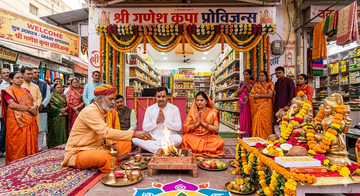
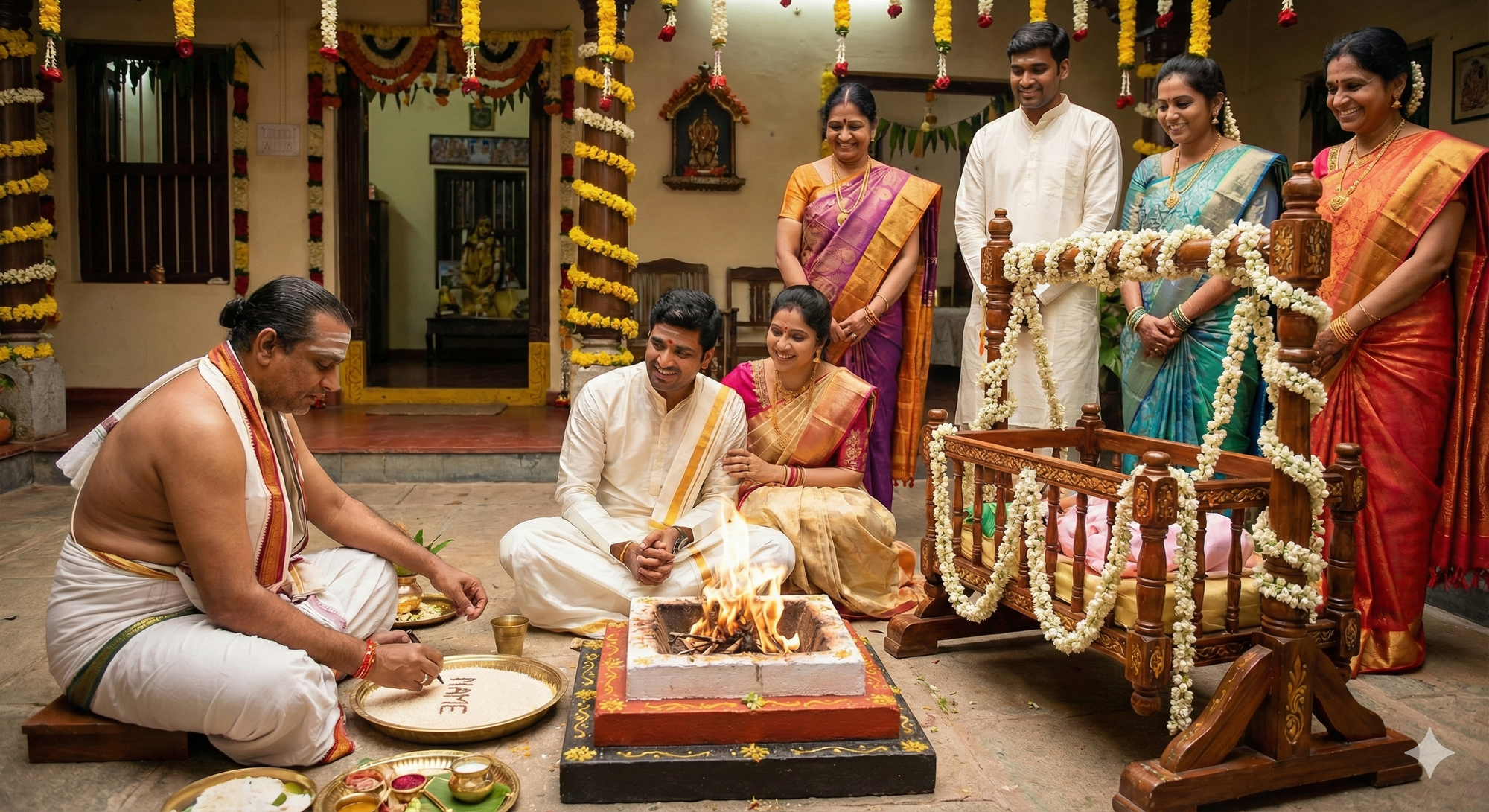
Naamakaranam, also known as the Hindu Naming Ceremony, is one of the most important samskaras (sacred rites of passage) performed after the birth of a child. This ceremony marks the moment when the newborn officially receives a name and is introduced to the family, community, and divine blessings.
Traditionally, the Naamakaranam ceremony is performed on the 11th or 12th day after the baby’s birth, though the exact timing may vary based on family traditions and astrological guidance.
During the ritual, priests chant Vedic mantras and prayers seeking divine blessings for the child’s health, longevity, wisdom, and prosperity. The chosen name is then ceremonially whispered into the baby’s ear, symbolizing the beginning of the child’s spiritual and social identity.
For many families, Naamakaranam is not only a religious ritual but also a joyful celebration welcoming the new member of the family.
✨ Spiritual Significance of Naamakaranam
In Hindu philosophy, a name is more than just an identity — it carries vibrational energy and spiritual influence that may shape the individual’s life journey.
The Naamakaranam ceremony is performed to:
🌿 Seek divine blessings for the child’s health and longevity
🌿 Align the child’s name with favorable planetary influences
🌿 Protect the child from negative energies
🌿 Welcome the child into the family lineage and community
Elders and priests bless the baby during the ceremony, wishing the child a future filled with wisdom, happiness, and prosperity.
🪔 Traditional Naamakaranam Rituals
Although customs may vary across regions, the core rituals of Naamakaranam remain similar.
1. Ganapathi Puja
The ceremony begins with prayers to Lord Ganesha, seeking removal of obstacles and ensuring the ceremony proceeds smoothly.
2. Kalasha Sthapana
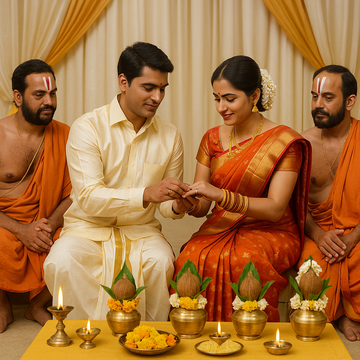
A sacred Kalasha (holy pot) filled with water and decorated with mango leaves and coconut is placed to invoke divine energies.
3. Name Whispering Ritual
The father, grandfather, or a respected elder gently whispers the baby’s name three times into the child’s ear, formally giving the child their name.
4. Blessings from Elders
Family members bless the newborn with rice, flowers, turmeric, and gifts, praying for the child’s healthy and prosperous future.
The ceremony is often followed by family gatherings, prayers, and celebrations.
🪔 Naamakaranam Puja Samagri List
Performing the Naamakaranam ceremony requires several traditional items used during the rituals.
Common puja essentials include:
-
Turmeric and Kumkum
-
Betel leaves and betel nuts
-
Coconut
-
Mango leaves
-
Flowers and garlands
-
Rice (Akshata)
-
Diyas and camphor
-
Kalasha with sacred water
These items help create a pure, sacred, and auspicious atmosphere for the naming ceremony.
🛒 Buy Naamakaranam Puja Kit Online
Preparing for a Naming Ceremony requires complete and authentic puja samagri. To make your celebration simple and spiritually fulfilling, Bhagyasri Stores offers a carefully curated Naamakaranam Puja Kit containing essential items required for the ritual.
Our kits are assembled to help families perform the ritual conveniently while maintaining traditional authenticity. We also provide experienced pandit ji services to perform the Naamakaranam puja, ensuring that every ritual is conducted correctly as per Vedic traditions, so you can focus on celebrating this auspicious occasion with your family.
👉 Order your Naamakaranam Puja Samagri Kit here:
https://bhagyasristores.com/products/naamakaranam-namkaran-peyar-suttum-vizha-naming-ceremony
🌿 Benefits of Performing Naamakaranam Ceremony
Performing the Naamakaranam ceremony with devotion brings several spiritual and cultural benefits.
- Seeks divine blessings for the child’s health and future
- Strengthens family traditions and cultural heritage
- Welcomes the child into the family lineage
- Brings positivity and spiritual protection
- Creates a memorable and meaningful milestone for the family
The ceremony represents the beginning of the child’s spiritual and social journey.
❓ Frequently Asked Questions – Naamakaranam Ceremony
Q1. When is Naamakaranam performed?
Traditionally, the ceremony is conducted on the 11th or 12th day after birth, though some families perform it on an auspicious date based on astrology.
Q2. Who performs the naming ritual?
The father, grandfather, or a respected elder usually whispers the baby’s name into the child’s ear during the ceremony.
Q3. Why is Naamakaranam important?
It formally gives the child a name and welcomes them into the family and spiritual tradition with divine blessings.
Q4. What items are needed for Naamakaranam puja?
Essential items include turmeric, kumkum, coconut, flowers, mango leaves, rice, fruits, diyas, and kalasha.
Q5. Can Naamakaranam be performed at home?
Yes, most families perform the ceremony at home with a priest and close family members.
🌼 Celebrate a Sacred Beginning
Naamakaranam is a beautiful and meaningful milestone that marks the beginning of a child’s spiritual and social life. With proper rituals, blessings, and family participation, the ceremony becomes a cherished memory for generations.
May your little one be blessed with health, happiness, wisdom, prosperity, and divine grace. 🌿👶